The Tracking Project
Bringing the Pieces Together Again
|
|
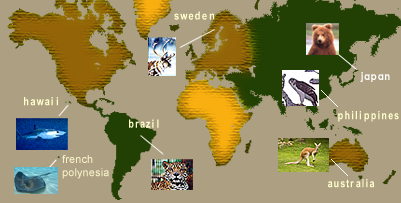
| click photos above to view other international experiences |
AUSTRALIA—
Honors to
Kevin “Dookie” O’Loughlin
and Uncle Jimmy James
Last year we received word from one of our Native Advisory Council members—Kevin “Dookie” O’Loughlin in Adelaide, South Australia—that he had received the Order of Australia Medal for his work with Reconciliation and Cultural Tourism. This year he sent a short report on his medal together with a recent article on my great friend, Pitjantjatjara tracker Jimmy James. Uncle Jimmy was a recipient of the O.A.M. in 1983. Though Uncle Jimmy passed away in 1993, his fame in Australia as a tracker is legendary... and may even be growing. As both Dookie and Uncle Jimmy played pivotal roles in the formation of The Tracking Project, I wanted to take this opportunity to honor them both.
 Dookie in New Mexico for the mentor reunion, 2000. (photo by Solar Law) |
From 1978 until 1983, I had a position as a part-time music teacher and counselor at the Aboriginal Community College (now known as Tauondi, Inc.) in Adelaide. The College was a unique initiative of the South Australian Aboriginal community to provide educational opportunities for a wide range of Aboriginal adults who might otherwise have no access to education. Based on principles of self-esteem, cultural identity, Aboriginality and self-management, the College served as a gathering place for urban, rural and tribal Aboriginal people, not just from the state of South Australia, but from all over Australia.
The older tribal men, especially a man from the Walmadjeri people of the Kimberleys who was known as Michelangelo because of his painting abilities, took a liking to me and began to teach me many things, including how to blow the didjeridu, how to make fire and many other bush skills. For many years, I was immersed in the study of everything Aboriginal and my teachers were Aboriginal people from every part of Australia.
At the College, we were constantly searching for effective programs and teachings which would enhance the selfesteem of our students. It was apparent that Aboriginal people needed a strong foundation of pride in their own culture, and even though the term “Lost Generation” had not yet been coined, it was also apparent that many Aborigines had been denied the teachings of their own culture.
When Dookie came to the College as a student in 1980, he and I became good friends. Not long after he began his studies, a teaching position in the Aboriginal Studies and Teaching Resource Unit (ASTRU) opened up and Dookie was successful in getting the job. I was often found in the resource unit with Dookie and our friend Mike Gray, studying artifacts, paintings, books and other materials.
In early 1981, I returned to the United States to make the final plans for a poetry tour I had conceived and coordinated with poet Gary Snyder, which we called Poems of Land and Life. The tour was scheduled for September/October 1981. While in the US, a friend took me to participate in one of Tom Brown, Jr.’s introductory tracking classes in New Jersey. To my surprise (and Tom’s), I was a “natural” at all the skills, from the concrete survival skills of shelter building and firemaking to the more esoteric skills of tracking and nature awareness. Tom was constantly asking, “How did you do that?” And I began to realize just how much the old tribal men at the College had been grooming my mind.
Suddenly I realized that tracking, in its broadest sense, was what I had been looking for as the sword to cut through the Gordian knot of problems confronting many of the students at the College. I could hardly wait to get back to Australia to share my ideas with the elders.
Poems of Land and Life was extremely successful in bringing attention to the situation of Aboriginal people in Australia. And when the tour was over, I went to Dookie, shared my ideas on tracking and asked him if there were any trackers in South Australia. I remember Dookie laughing and saying that one of the best trackers in Australia lived right up the road.
Together, Dookie and I went to Gerard Mission to meet Uncle Jimmy. Though he was sad we were not taking him on a tracking case, Uncle agreed to come to the College and demonstrate his skills. And when he did come, the effect on the students was positive and immediate. In Uncle Jimmy James, they were able to see all the positive cultural values that are intrinsic to the Aboriginal people.
Uncle Jimmy and I became great friends and over the next years, we shared many adventures. His daughter, Alice, would often join us. At the time, I was about 29 years old and he was about 72, so he called me “Old Fella” and I called him “Young Fella.” Though Uncle never claimed to be my“teacher,” I was always learning something new—how to gather wood for boomerangs from the mulga trees, how to shape “come-back” boomerangs, how Pitjantjatjara youth learn to mimic animal tracks with different parts of their hand, even how to speak with different animals. Several times we visited an old tracking friend of his—Daniel Moodoo— and I would listen to the two of them relating past adventures.
When I left Australia in early 1984, Uncle Jimmy came to the airport to see me off. I was able to visit with him once more in 1987 and we maintained contact through Alice and his nephew, Bluey Roberts, until the time he passed away. Space does not allow me to tell any more of this remarkable tracker, but the article that follows touches on many of the highpoints in Uncle Jimmy’s life. He was a remarkable bloke and I have tried to do the best I could to share his inspiration with our students. Anyone who has ever been out with The Tracking Project has probably heard an Uncle Jimmy story or two.
To my friends Dookie, whose dedication to Aboriginal culture has touched so many thousands of people, and Uncle Jimmy, whose gift for tracking helped to elevate the art of tracking around the world, I send my deepest appreciation.
–JS
Tracker who could see the invisible Jimmy James was the humble hero
Jimmy James had every reason to hate white men. Used and abused after venturing off the Pitjantjatjara Lands as a youth, he felt the full force of the white bigotry that pervaded the early 1900s. After escaping enslavement on a cattle station, he could easily have grown into an angry man, just like many of his brothers. Instead, he emerged as one of the greatest healers of relations between the Aboriginal people and white Australians. For almost 50 years he worked closely with SA police and, in doing so, Jimmy James, the black tracker, became one of the most significant Aboriginal figures in SA’s history. Using tracking skills and instincts honed by generations of Pitjantjatjara men, Jimmy was instrumental in catching murderers, escapees and just about any other rogue who was silly enough to flee into the bush. Of the 104 times police enlisted the services of the proud tracker, two cases have become celebrated. The first was in 1966 when he found a young girl who had been wandering lost in the Adelaide Hills. For three days, more than 150 police and volunteers had been scouring bushland near Mylor searching for Wendy Pfeiffer, 9, following her abduction. On the fourth day, police called in Jimmy. It took him just three hours to find her. After picking up her trail he led police through 20km of scrubland to where she was on the banks of the Onkaparinga River. His actions in finding the girl ensured a place for him in the hearts of all South Australians at the time. The second case is perhaps even more recognised. In 1982, he spent six days tracking child killer James George Smith after he escaped custody in the Riverland. The chase covered more than 100km through some of the state’s roughest country. In the end, Jimmy’s brilliance prevailed. The Smith case is remembered fondly by veteran police officer Sid Thomas, now a Senior Sergeant at Sturt CIB. In 1982, he was attached to the former Special Crime Squad, assigned to the Smith manhunt several days after it started. He recalls taking a woman Smith had raped shortly after his escape to the last location she had seen the child killer in the Riverland. From then it was a game of cat and mouse. While some clues were obvious, others were only noticed by Jimmy. A broken twig, disturbed insect nest or a barely perceptible footprint Smith left behind as he headed for the border. Sen-Sgt Thomas remembers Jimmy explaining his work to him and other police officers involved in the manhunt as it unfolded. “He tried to teach us,” he said. “He told us what animal tracks belonged to, how big and even what they were doing and how he knew. “He could tell how long a twig or a branch had been broken by looking at it, but we had no idea. “It made the whole thing quite interesting. Often he joked that he had taught us enough and we should take over the tracking.” Sen-Sgt Thomas said Jimmy’s skill was evident when he lost Smith’s trail. He would sit and study his environment, the landscape and the terrain and try to predict the path his quarry would take. Invariably, he was spot on. This occurred for the umpteenth time on day six of the manhunt when, seemingly out of nowhere, Jimmy told police to stop. He walked into the scrub for a few hundred metres until he again picked up the trail. But this time he would walk no more, simply pointing to a rise another few hundred metres away. Sure enough, Smith was found sleeping under a tree, just where Jimmy indicated. A polite tap on the head with a shotgun barrel woke Smith from his slumber. “You could see the look of satisfaction on Jimmy’s face that he had achieved what he set out to do,” Sen- Sgt Thomas said. “He loved it, he loved helping.”
Retired police officer Bill Newman is another who fondly remembers his working relationship with Jimmy over a seven-year period when he was a detective based at Berri. Even today, 45-odd years after he first met Jimmy, Mr Newman is in awe of his tracking ability. He enlisted his help to find escapees from Cadell, missing people and even the odd firebug. He also worked with him chasing Smith. In one slightly humorous case, Mr Newman even used Jimmy’s services to settle a minor dispute with Victorian police. A body had been found on the border fence—on the wrong side for Victorians, who suggested the murder may have occurred in SA and, as such, was Mr Newman’s problem. Jimmy soon set them straight, saving Mr Newman a lengthy inquiry. Mr Newman says he can still remember walking with Jimmy, astounded at the “invisible” things the tracker could see. “Sometimes he could point things out you were oblivious to,” he said. He cited one such example when they were tracking Smith. Jimmy suddenly stopped and said to him: “He is getting angry.” “He pointed out a spinifex bush and said: ‘He sunk his boot into it.’ And well, when you put your boot in the impression, that’s what had happened. A white fella would just never know that.” He said, in another case he was following Jimmy and he suddenly turned at a right angle to his path, walked 20m and picked up a half-eaten apricot. Incredibly, he knew his quarry had thrown an object while walking. While Jimmy seemed to enjoy hunting fugitives, he stopped short of being part of the finale. “All of a sudden he would stop and I would ask him what was wrong,” Mr. Newman said. “‘Go over that hill and he’s there,’ would be his reply and, sure enough, nine times out of 10 he would be there. “He would never want to front the bloke he was tracking. He didn’t like the confrontation. He was a very peaceful man.” Jimmy’s work with police was recognized in 1983 when he was awarded the inaugural Aboriginal Person of the Year award. The following year he was awarded the Order of Australia. Although no one knew exactly how old James was when he died in 1991— possibly in his 80s—it is known he moved to SA in 1946, settling on the Gerard Mission, near Berri. While his tracking skills initially were utilised to provide food for the mission, he would soon be called upon by those who recognised his unique talents. Sadly, in the decade leading up to his death in 1991, it appears Jimmy James knew he was the last of a generation. During the Smith manhunt he often spoke to Sen-Sgt Thomas about his frustration that none of his clan wanted to learn the secrets of the age-old craft. As more and more Aboriginal people moved from their traditional lands and changed their lifestyles, the need to track and kill their own food simply disappeared. When Jimmy James died in 1991, he took the secrets of his ancient art with him. |

Email: thetrackingproject@earthlink.net